I built four recovery apps and a landing hub: zero dependencies, offline forever.
People quitting substances need simple, private, always-available tools that show real progress. Existing apps were bloated with ads or required accounts. I built four recovery trackers plus a central hub, with clinically sourced milestones, offline-first architecture, and no account required.
Recovery apps that need WiFi, accounts, and tolerance for ads
Someone trying to quit smoking at 2am doesn't want to create an account. They don't want ads for vape shops. They don't want their recovery data on someone else's server. They want to see that their lungs are healing and their blood pressure is dropping.
Every existing app I found was either bloated with features, gated behind subscriptions, or treated recovery as a social media experience. None of them felt like something you'd actually use at your worst moment.
Four trackers, one landing hub
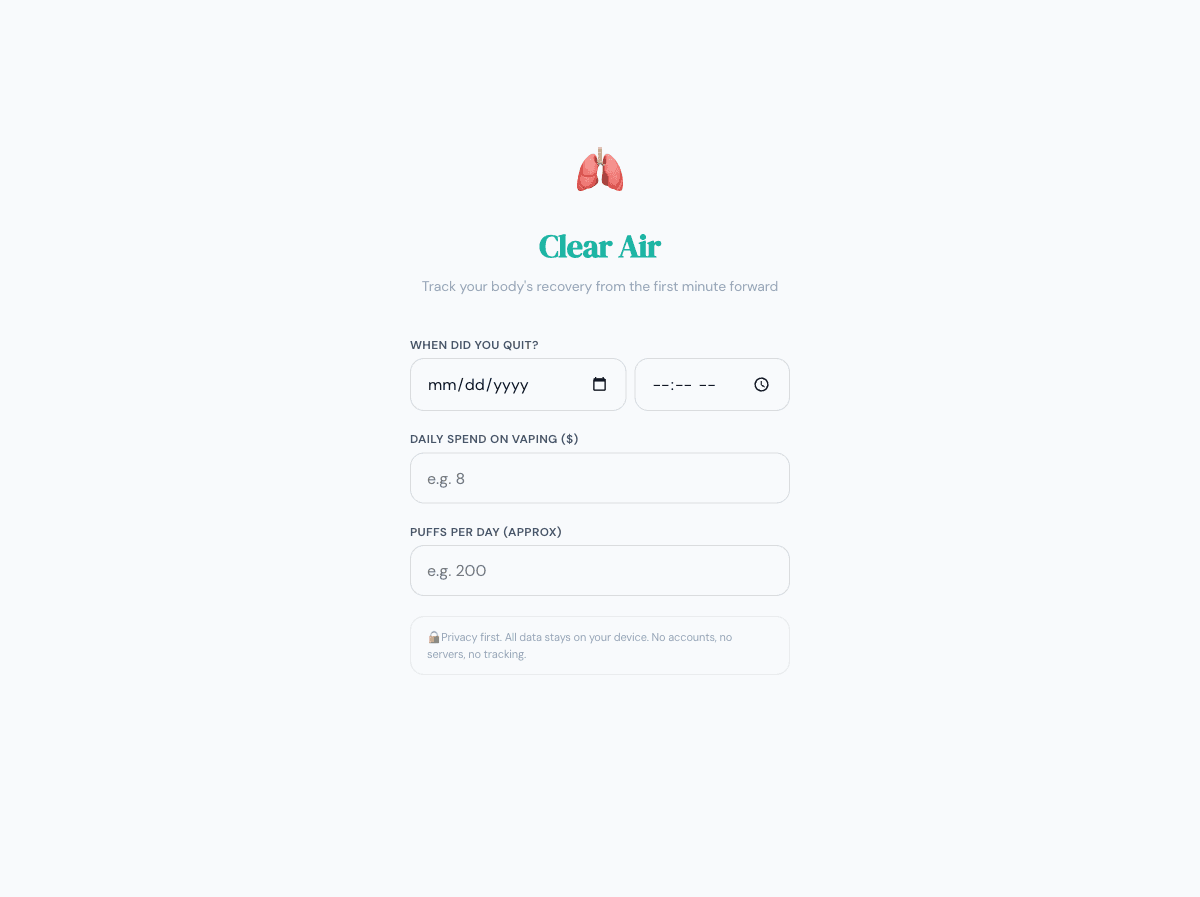
Clear Air
Nicotine & vaping recovery
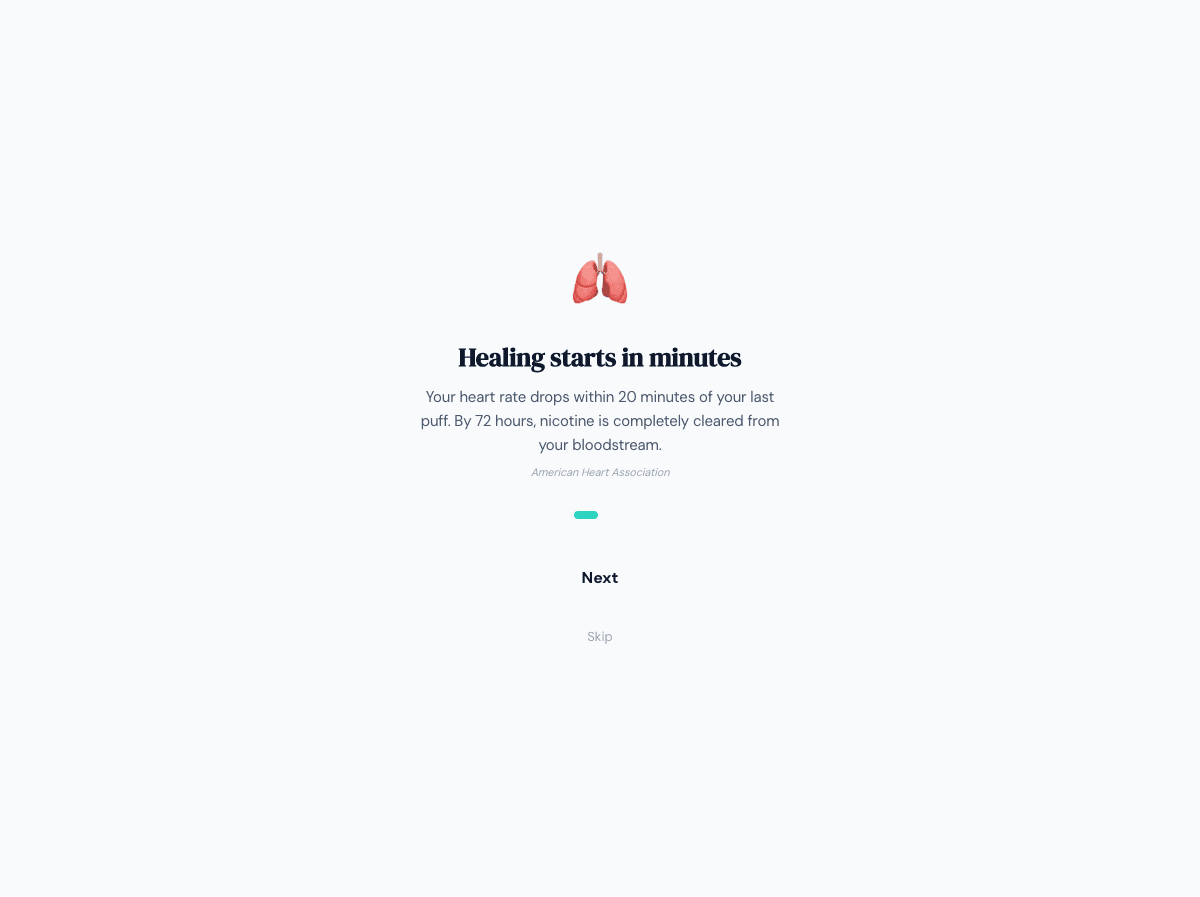
Cardiovascular recovery, lung function, cancer risk reduction. Milestones sourced from Cleveland Clinic and AHA research.
Clear Mind
Cannabis recovery
Cognitive function, REM sleep restoration, memory improvement. Based on NIDA and PubMed studies on THC elimination timelines.
Clear Flow
Alcohol recovery
Liver function, blood pressure, immune system recovery. Clinically weighted from Journal of Hepatology data.
Clear Body
Sugar & fast food recovery
Insulin sensitivity, inflammation markers, gut microbiome restoration. Front-loaded scoring shows fastest progress in the first week.
Four design decisions that matter
Clinically Weighted Milestones
Every milestone sourced from peer-reviewed medical literature: Cleveland Clinic, AHA, NIDA, PubMed. The apps show real physiological recovery curves with weighted scoring that reflects clinical significance, so progress means healing rather than motivational fluff.
Front-Loaded Reward Design
The scoring system intentionally shows the most visible progress in the first days and weeks. This is a behavioral design choice: early recovery is when relapse risk is highest, so the app reinforces progress when people need it most.
Craving Intervention Tools
Built-in 4-4-6 breathing exercises activated during craving moments. Craving logging with trigger categorization and outcome tracking, so users can identify their patterns over time.
Privacy as the Product
For something as sensitive as substance recovery, the zero-server architecture is the product decision, not just a technical one. No account. No data leaves the device. Nothing to breach, nothing to subpoena, nothing to be embarrassed about.
Simplicity is the hardest architecture
Zero dependencies as an architecture choice
Each app is a single HTML file, ~80KB containing all React components, CSS, and logic inline. React 19 loads from CDN. No npm, no bundler, no build step, no node_modules. This eliminates entire categories of complexity: no dependency vulnerabilities, no build failures, no version conflicts. The trade-off is manual component management, but for apps this size, that's the right call.
Offline-first for people without reliable internet
Recovery doesn't pause when WiFi drops. Each app has a service worker and full PWA manifest. After the first load, everything works offline forever. localStorage handles all persistence. There are zero network requests after the initial page load.
Making medical data motivating without being misleading
Clinical recovery timelines are real but complicated: lung cilia regrowth takes months, liver enzyme normalization takes weeks, dopamine receptor density takes a year. The scoring weights milestones by clinical significance, not just time elapsed, so the progress bar reflects real healing rather than arbitrary percentages.
Monetization without dark patterns
Free 7-day trial, then $4.99 once for all four apps forever. No subscription. No ads. No upsells. No account required. The payment flow is simple: unlock page, payment, thank you. Users keep their data regardless of payment status.
Radically simple by design
Each app is a single HTML file. React loads from CDN. No build step, no bundler, no node_modules directory. The entire repo is 41 files. Each app deploys as its own Railway service with its own Caddy/Docker config, but shares a single monorepo for management.
Full Stack
A complete product, not a demo
Shipped and live
Five apps deployed and serving real users. Monetization built in. Analytics tracking usage. PWA installable on any device. It left the repo and became a product people rely on.
Clinical rigor
Milestone data sourced from peer-reviewed medical literature. Cleveland Clinic, AHA, NIDA, PubMed. The recovery timelines model actual physiological healing, not motivational guesswork.
Constraint-driven design
I chose zero dependencies. Someone quitting smoking at 2am gets a tool that loads instantly and never shows them an ad. Eliminating the build toolchain, the server, and the account system made the apps faster, more private, and more reliable than the alternatives.
Design for vulnerability
Recovery is deeply personal. The entire product is designed around that reality: nothing leaves the device, no judgment, no social features, no ads. The architecture serves the user's emotional state, not engagement metrics.
Need a product built with this level of intention?
Let's Talk